Blog Detail
Fibre Optic Cable Speeds Explained: How Fast Can You Go?
One of the most compelling reasons businesses and consumers choose fibre optic technology is speed. Fibre optic cables can carry signals at speeds far above conventional copper wiring, enabling efficient broadband, enterprise networking, and backbone transmission.
Fibre optic cables are constructed from strands of glass about the thickness of a human hair, each capable of carrying light signals over long distances with very low loss. These light pulses allow data to move at near-light speeds, resulting in throughput that can exceed 100 Gbps for modern network deployments.
By contrast, traditional copper cables are limited by electrical resistance and electromagnetic interference, which cap speeds and reduce signal reliability over distance. Fibre optics boast higher bandwidth and longer reach because photons (light particles) don’t suffer the same degradation.
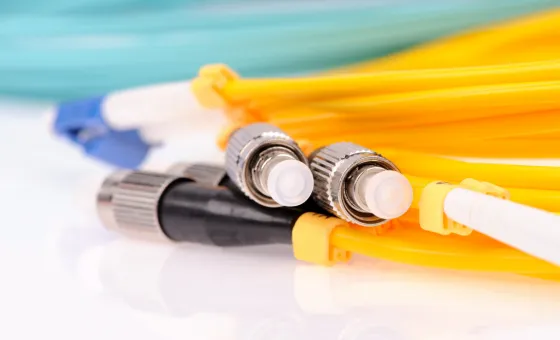
The performance of a fibre optic link depends on several technical factors, including the type of cable (single-mode vs multimode), the quality of splices and connectors, and the optical equipment used at either end. Single-mode fibre is typically used for long-haul links and metro networks, while multimode fibre is ideal for shorter distances, like within data centers.
With increasing demand for high-definition streaming, VR/AR applications, cloud services, and remote work tools, fibre optic speeds are more critical than ever for businesses and ISPs. As edge computing and next-generation technologies like 5G continue to expand, the role of high-speed fibre will only grow.