Blog Detail
What Is Fibre Optics & How Does It Work? – Ultimate Guide
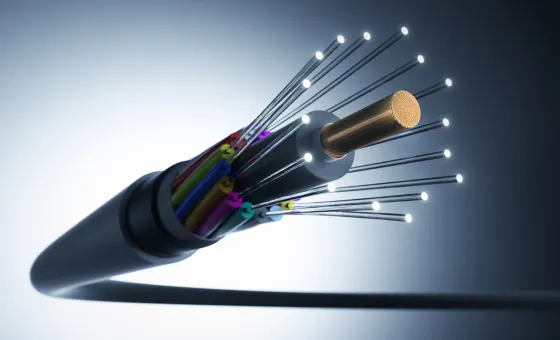
Fibre optics is the backbone of modern digital communications. Instead of using electrical signals like traditional copper cables, fibre optic cables send data as pulses of light through ultra-thin glass or plastic fibres. This fundamental difference allows information to travel at speeds far beyond what copper can achieve, making fibre optics essential for high-speed internet, streaming, cloud computing, and enterprise networks.
At the core of the technology is total internal reflection — a physics principle that keeps light travelling through the glass core without escaping. Light signals are generated by lasers or LEDs at one end of the cable and captured by photodetectors at the other, enabling massive data throughput with minimal loss.
Fibre optic cables come in two broad types: single-mode and multi-mode. Single-mode fibre supports long-distance communication with laser light, making it ideal for telecom backbones and internet infrastructure. Multi-mode fibre uses LEDs and is optimized for shorter links like data centers and campuses.
Because they transmit light, fibre optic cables suffer far less signal degradation than copper and are immune to electromagnetic interference. This results in more reliable links, higher bandwidth capacity, and the ability to support future technologies like 5G, IoT, and edge computing.
From global submarine networks connecting continents to FTTH (Fibre-to-the-Home), fibre optics enables the digital experiences we rely on every day, including HD video streaming, cloud applications, smart manufacturing, and secure business connectivity.